





Introduction
The palm oil industry is an important part of the economies of Indonesia and Malaysia. Both countries play a major role in global palm oil production and trade. As a result, changes in production costs in this sector can have a wider impact on the vegetable oil market and global supply chains.
However, the palm oil industry is currently facing an energy-related challenge. Higher diesel prices and limited fuel supplies are putting additional pressure on plantation and processing operations. This issue is particularly important because many plantation activities still rely on diesel-powered vehicles and machinery.
Diesel is used at various stages of plantation operations, from transporting harvested crops and operating heavy equipment to supporting processing and distribution activities. When fuel prices increase or supplies become more difficult to obtain, operating costs can also rise.
For large-scale plantations, higher fuel costs are not only an issue at the fuel station. The impact can spread to harvesting, transportation, equipment maintenance, processing, and product distribution.
This situation shows why energy efficiency is becoming increasingly important for the palm oil industry. Proper diesel engine management, regular maintenance, suitable components, and effective emission control can all support productivity while helping manage long-term operating costs.
The Indonesian and Malaysian Palm Oil Industries Amid Rising Diesel Prices
Indonesia and Malaysia hold strategic positions in the global palm oil industry. Palm oil operations in both countries cover large areas and involve many activities that require vehicles and machinery.
Diesel remains important in plantation operations because diesel engines are well suited for tasks that require high torque and long operating hours.
Vehicles and diesel-powered equipment can be used to transport fresh fruit bunches (FFB), move workers and materials, operate heavy equipment, and support various plantation maintenance activities.
When diesel prices rise, every trip and operation involving diesel-powered vehicles becomes more expensive. For plantations covering large areas, these additional costs can become significant.
Another challenge occurs when higher prices are accompanied by limited fuel supplies. In this situation, companies face not only higher costs but also the risk of operational disruptions.
Fuel shortages can prevent vehicles and heavy equipment from operating according to schedule. This can be a serious issue for the palm oil industry because harvesting activities are highly time-sensitive.
Fresh fruit bunches need to be transported to processing facilities soon after harvesting to maintain their quality. Transportation delays can therefore affect the efficiency of the entire production process.
Why Is the Palm Oil Industry So Dependent on Diesel?
The palm oil industry’s dependence on diesel is not without reason. Plantation operations have different characteristics from those in urban areas.
Many plantations are located far from cities and may have difficult terrain. Plantation roads can also have varying conditions depending on the weather, season, and geographical characteristics of the area.
Under these conditions, diesel-powered vehicles and machinery remain a practical choice because they can provide the power required for heavy-duty work.
FFB Transportation
One of the most important uses of diesel is the transportation of harvested crops.
After fresh fruit bunches are harvested, they need to be collected and transported to collection points or palm oil mills. This process requires vehicles capable of carrying heavy loads and operating on different types of roads.
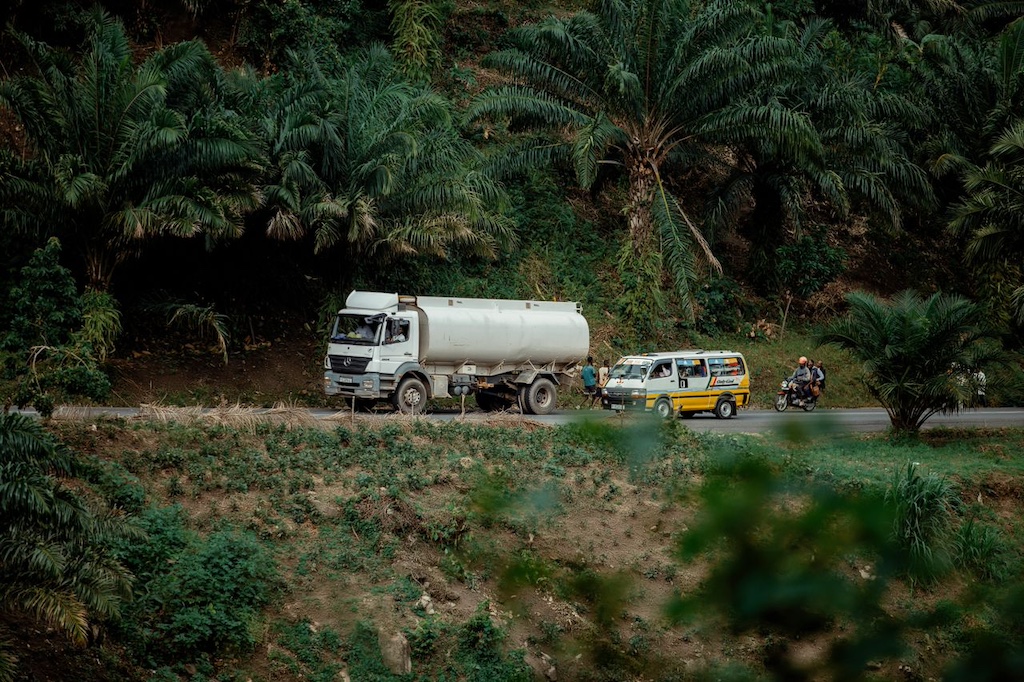
Diesel trucks are widely used because they can carry large loads and operate over relatively long distances.
Heavy Equipment and Plantation Machinery
In addition to trucks, various types of heavy equipment and supporting machinery also rely on diesel.
Excavators, wheel loaders, tractors, and other equipment can be used to develop and maintain plantation infrastructure.
These machines allow many tasks to be completed more quickly and efficiently than relying entirely on manual labor.
Mill Operations
Diesel dependence is not limited to plantations. Several supporting activities within the production chain also require diesel-powered vehicles and machinery.
Raw material transportation, product distribution, and other logistics activities require vehicles that can operate consistently.
Therefore, changes in diesel prices can affect different parts of the palm oil value chain.
Rising Diesel Prices Increase Operating Costs
Fuel is an important part of vehicle and heavy equipment operations. When diesel prices rise, companies need to spend more to maintain the same level of activity.
The impact can be seen in higher costs for transporting harvested crops, operating heavy equipment, and distributing products.
For plantations covering large operating areas, fuel efficiency becomes increasingly important. A small increase in fuel consumption from one vehicle may seem insignificant, but when multiplied across a large fleet and frequent operations, the overall impact can become substantial.
For this reason, fuel consumption management should be part of the overall operational strategy.
Companies can monitor fuel consumption, perform regular engine maintenance, maintain proper tire pressure, and optimize transportation routes to reduce unnecessary travel.
Threats to Palm Oil Production
Higher diesel costs do not stop at the operational level. If production costs increase significantly, companies may face pressure on margins and productivity.
One of the biggest risks is disruption to harvesting and transportation activities.
In the palm oil industry, timing is critical. Mature fresh fruit bunches need to be harvested and delivered to the mill at the right time. If transportation is disrupted because of limited fuel supplies, overall production efficiency may decline.
This can create a chain reaction.
When transportation vehicles cannot operate properly, harvested crops may remain at collection points. If deliveries to the mill are delayed, processing operations can also be affected.
On a larger scale, disruptions to harvesting and processing can influence the amount of palm oil available in the market.
Impact on the Palm Oil Supply Chain
The palm oil industry has a long and interconnected supply chain.
It starts with plantations and continues through harvesting, FFB collection, transportation, palm oil processing, storage, and distribution to various markets.
Each stage requires good coordination.
When one part of the supply chain is disrupted, the impact can spread to other stages. For example, limited diesel supplies can reduce the availability of transportation vehicles. When transportation is disrupted, the supply of raw materials to palm oil mills can also decline.
This shows that energy is an important part of supply chain resilience in the palm oil industry.
Therefore, energy management is not only about obtaining fuel at a competitive price. It is also about ensuring reliable availability and using fuel as efficiently as possible.
Diesel Engine Efficiency Is Becoming More Important
When fuel prices are high, companies need to pay greater attention to engine condition.
Poorly maintained engines can become less efficient. Problems with the fuel system, filters, injectors, turbochargers, or other components can make an engine work harder and consume more fuel.
Preventive maintenance is one way to avoid these problems.
Regular inspections can help identify issues before they develop into more serious failures. In addition to reducing the risk of downtime, proper maintenance can help maintain engine efficiency.
For vehicles and heavy equipment operating under demanding conditions, component quality also plays an important role. Using components that meet the required specifications can help keep the system operating as designed by the manufacturer.
Emission Control Remains Important
Fuel efficiency and emission control are becoming increasingly connected in modern diesel engine operations.
Diesel combustion produces exhaust emissions that may contain nitrogen oxides (NOx), particulate matter, carbon monoxide, and certain hydrocarbons.
For this reason, modern diesel vehicles are equipped with various emission control technologies such as Diesel Oxidation Catalysts (DOC), Diesel Particulate Filters (DPF), Exhaust Gas Recirculation (EGR), and Selective Catalytic Reduction (SCR).
SCR technology is specifically designed to help reduce NOx emissions.
In an SCR system, Diesel Exhaust Fluid (DEF) is used to support the NOx reduction process inside the SCR catalyst. DEF that meets the required specifications and is handled properly is an important factor in maintaining effective emission control.
For vehicles and heavy equipment operating for long hours in plantation environments, keeping the emission system in good working condition can support both environmental management and vehicle maintenance.
Products such as Luftblue DEF can be used in compatible SCR systems while following the specifications and recommendations provided by the vehicle or equipment manufacturer.
Strategies for Managing Rising Diesel Prices
Higher diesel prices require companies to reconsider how they manage energy use.
One approach is to improve vehicle operating efficiency. Transportation routes can be optimized to reduce travel distances without reducing productivity.
Companies can also use vehicle monitoring systems to track fuel consumption, operating hours, and vehicle usage patterns.
This data can help companies identify vehicles or equipment that may require further inspection.
Preventive maintenance should also be a priority. Engines operating in good condition are generally better prepared to handle demanding workloads.
At the same time, companies can gradually consider diversifying their energy sources. Biodiesel, electrification for suitable applications, and renewable energy can become part of a long-term energy transition strategy, depending on the specific requirements of each operation.
https://www.pexels.com/photo/tanker-truck-on-rural-roadside-with-vehicles-31448408/
Challenges Toward More Sustainable Operations
The transition toward more sustainable operations cannot depend on a single solution.
The palm oil industry requires vehicles and heavy equipment capable of operating in demanding environments. Therefore, alternative technologies need to consider technical requirements, investment costs, infrastructure, and actual operating conditions.
Diesel engines are likely to remain important to the industry for some time. However, their environmental and operational impact can be reduced through proper maintenance, more efficient engine technology, the use of fuel that meets the required specifications, and well-maintained emission control systems.
This approach can help reduce energy waste while also limiting the environmental impact of plantation operations.
Diesel Prices and the Future of the Palm Oil Industry
Rising diesel prices are a reminder that dependence on a single energy source can create risks for an industry.
When fuel prices increase or supplies become limited, sectors with high diesel dependence can face greater operational pressure.
The palm oil industry needs to strengthen its energy resilience through a combination of efficiency improvements, energy diversification, vehicle technology, and better operational management.
In the long term, industry sustainability will not depend only on production volume. Resource efficiency, emission reduction, cost management, and supply chain resilience will also become important factors in maintaining competitiveness.
Conclusion
Rising diesel prices and limited fuel supplies are becoming major challenges for the palm oil industry in Indonesia and Malaysia. The industry’s dependence on diesel-powered vehicles and machinery means that changes in fuel prices can directly affect harvesting, transportation, processing, and palm oil distribution.
The biggest risk occurs when fuel supply disruptions prevent operations from running efficiently. In a time-sensitive industry such as palm oil, transportation problems can affect the entire supply chain.
To address these challenges, diesel engine efficiency, preventive maintenance, logistics optimization, and effective fuel management are becoming increasingly important. At the same time, emission control should remain a priority through technologies such as SCR and the use of DEF that meets the required specifications.
Looking ahead, the palm oil industry needs to develop a more resilient energy strategy. Diesel will likely remain an important part of plantation operations, but its use can be managed more efficiently and responsibly.
By combining operational efficiency, emission control technology, alternative energy sources, and stronger supply chain management, the palm oil industry can better respond to energy price pressures while moving toward operations that are more efficient, resilient, and sustainable.
Read other Articles: Rising Energy Prices: The Impact of Conflict on the Global Economy