



Introduction
Waste management has become one of the biggest challenges in modern industrial development. The growth of manufacturing, energy, mining, and logistics sectors generates massive amounts of waste that require proper handling to prevent serious environmental and public health impacts. As global demand for sustainable industrial practices continues to rise, companies are now expected not only to focus on productivity but also to take responsibility for waste management and emission reduction.
In this context, the 2nd Indonesia-Japan Environment Week became an important momentum to strengthen international collaboration in addressing environmental challenges. The forum brought together governments, industry players, academics, and technology providers to discuss sustainable environmental solutions, including industrial waste management and the implementation of a circular economy.
One of the key participants highlighted during the event was PPLI, a company specializing in integrated waste management and environmental solutions. Through its participation, PPLI emphasized the role of technological innovation in driving industrial transformation.
Collaboration across sectors supports the development of more sustainable and environmentally responsible systems.
PPLI’s Participation in The 2nd Indonesia-Japan Environment Week
PPLI’s participation in the 2nd Indonesia-Japan Environment Week reflects the growing industrial focus on integrated environmental management. During the forum, PPLI introduced various waste management solutions designed to help industries meet environmental standards while improving operational efficiency.
The involvement of waste management companies in international forums like this is increasingly important because waste management is no longer viewed merely as an operational necessity, but as part of a long-term business strategy. Companies across various sectors face growing pressure to reduce environmental impact, lower carbon emissions, and implement more sustainable industrial practices.
Through its participation, PPLI also demonstrated that modern waste management requires a technology-driven, collaborative, and innovative approach. The forum served as a platform to exchange knowledge and strengthen cooperation between Indonesia and Japan in developing more effective environmental solutions.
Integrated Waste Management Technology Exhibition for Industry
One of the main highlights of the event was the exhibition of integrated waste management technologies aimed at supporting modern industrial needs. The showcased technologies included industrial waste treatment systems, hazardous and toxic waste (B3 waste) management, and industrial emission reduction solutions.
Hazardous waste management became a major concern because this type of waste poses significant environmental and health risks if not handled properly. Industries such as manufacturing, energy, mining, and chemicals generate hazardous waste that requires specialized treatment systems in accordance with safety standards and regulations.
With the implementation of modern technology, waste treatment processes can now be carried out more efficiently and safely. Some of the showcased solutions included material recovery technology, thermal treatment systems, emission monitoring systems, and industrial recycling methods.
In addition to waste management, industrial emission reduction technology also became an important topic during the forum. Industries worldwide are facing increasing pressure to reduce carbon emissions as part of global climate change mitigation efforts. Therefore, integrating waste management with emission control has become a strategic step toward building low-carbon industries.
Supporting Sustainable Industrial Practices and the Circular Economy
The 2nd Indonesia-Japan Environment Week also emphasized the importance of implementing sustainable industrial practices and circular economy principles. The circular economy concept focuses on reusing materials and waste repeatedly to reduce natural resource exploitation and minimize waste disposal into the environment.
In modern industries, waste is no longer seen simply as an end product to be discarded, but as a resource with economic value. This approach encourages companies to develop production systems that are more efficient, generate less waste, and prioritize sustainability.
Integrated waste management plays a crucial role in supporting the transition toward a circular economy. With the right systems, industrial waste can be converted into alternative energy, new raw materials, or value-added products.
Besides delivering environmental benefits, these practices can also improve operational cost efficiency for companies. As a result, many industries now view waste management as a long-term investment that supports future business competitiveness.
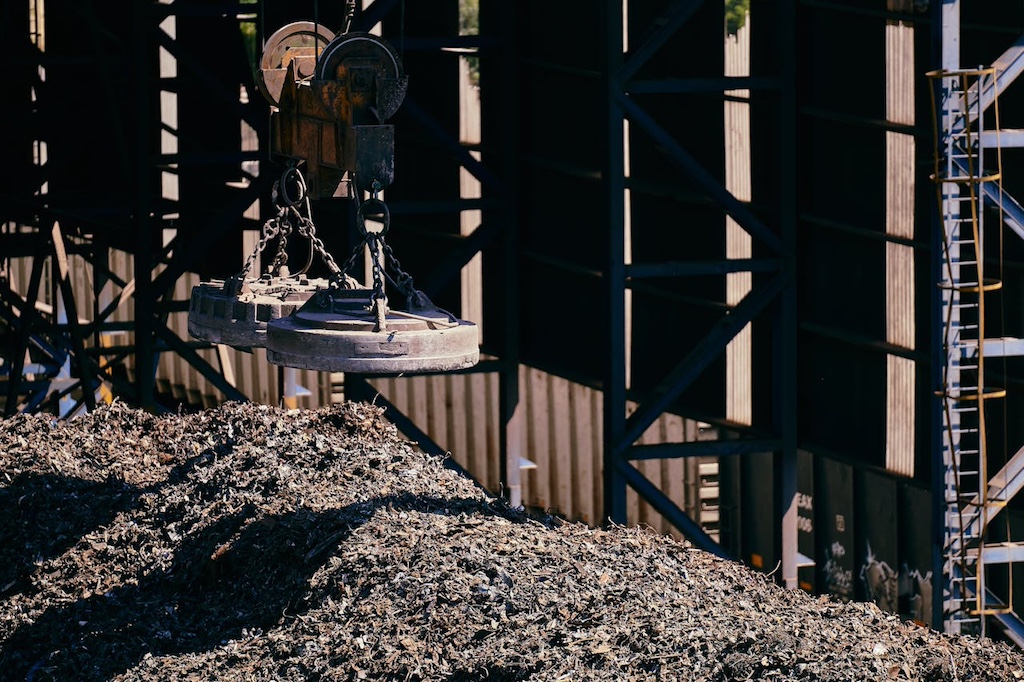
https://www.pexels.com/photo/industrial-scrap-metal-yard-with-magnet-crane-36397894/
The Role of Waste Management in Achieving Corporate ESG Targets
Today, Environmental, Social, and Governance (ESG) principles have become important indicators in evaluating corporate sustainability and performance. Investors, business partners, and consumers increasingly pay attention to how companies manage the environmental and social impacts of their operations.
In this context, waste management plays a significant role in supporting corporate ESG targets. Effective waste management systems help companies reduce pollution, lower emissions, improve resource efficiency, and strengthen compliance with environmental regulations.
Furthermore, implementing sustainable waste management practices enhances a company’s reputation in the public and global markets. Many international companies now include ESG standards as an important requirement within supply chains and business partnerships.
Therefore, investment in waste management technology and environmental solutions is no longer viewed as an additional burden, but rather as a strategic step to maintain long-term business sustainability.
Conclusion
The 2nd Indonesia-Japan Environment Week demonstrated that waste management has become a crucial part of modern industrial transformation toward sustainability. Through international collaboration, technological innovation, and multi-sector involvement, the forum encouraged the development of more effective and integrated environmental solutions.
PPLI’s participation highlighted the important role of environmental management companies in supporting industrial sustainability. These companies help industries address increasingly complex waste, emission, and ESG challenges. Integrated waste management technologies play a key role in improving operational efficiency. The implementation of circular economy principles also supports more environmentally friendly industrial systems.
Moving forward, waste management will no longer be viewed solely as a regulatory obligation but as a key part of sustainable business strategy that determines corporate competitiveness in the modern industrial era.
Read other Articles: Towards Environmentally Friendly Boilers with SCR Technology