



Introduction
Waste management in Indonesia has traditionally been associated with environmental cleanliness, landfill capacity, river pollution, and public health concerns. However, as discussions surrounding climate change continue to develop, it has become increasingly clear that waste presents a much broader challenge. Poorly managed waste can also become a source of greenhouse gas emissions and contribute to global warming.
Indonesia currently generates up to 51 million tons of waste every year. A significant portion of this waste is still not managed optimally. Mixed waste disposed of in landfills, particularly under open-dumping practices, can generate methane as organic materials decompose in oxygen-limited conditions. This makes waste management not only a matter of cleanliness, but also an important part of climate change mitigation efforts.
In this context, waste management is increasingly being viewed as part of the effort to achieve climate justice. Climate justice is not only about reducing emissions, but also about ensuring that the impacts of climate change and the benefits of environmental policies are distributed more fairly across society.
As climate change increasingly affects communities through extreme weather, floods, droughts, and threats to coastal areas, emissions reduction needs to be addressed across multiple sectors. Waste management is one area where direct improvements can be made through behavioral changes, technology, infrastructure, and more efficient resource management.
Waste Is No Longer Just a Cleanliness Issue
Accumulated waste is often viewed primarily as a visual and sanitation problem. Waste piles can produce unpleasant odors, disrupt community activities, contaminate soil and water, and increase various health risks.
However, the impact does not stop there.
When organic waste such as food scraps, leaves, and other biodegradable materials is disposed of together with other types of waste under oxygen-limited conditions, the decomposition process can generate methane (CH₄). Methane is a greenhouse gas with a significantly higher heat-trapping capacity than carbon dioxide over a given period.
This means that the way waste is managed is directly connected to emissions.
The more waste that is simply collected and disposed of without adequate treatment, the greater the potential for emissions to be generated throughout the process. Therefore, waste reduction strategies need to consider the entire management cycle, from how waste is generated, sorted, collected, transported, and processed to how the remaining waste is ultimately disposed of.
This approach is important because an effective waste management system should not only make an area look clean. It should also minimize pollution and emissions throughout the management process.
Indonesia Generates Up to 51 Million Tons of Waste per Year
The amount of waste generated in Indonesia makes waste management a national challenge. Data from Indonesia’s Ministry of Environment indicates that the country generates up to approximately 51 million tons of waste annually, with around 74% of this waste reportedly still not being managed optimally. A significant amount also ends up at disposal sites using open-dumping practices.
These figures show that Indonesia’s challenge is not simply how to transport waste away from residential areas, commercial districts, or industrial facilities. A much greater challenge is ensuring that waste is properly treated after it has been collected.
If waste is merely moved from one location to another without adequate sorting and processing, the environmental problem has not actually been solved.
Moreover, mixed waste makes treatment processes more difficult. Organic materials, plastics, paper, metals, and other types of waste have different characteristics and require different management methods. When all of these materials are mixed together, opportunities to recover and reuse valuable materials are reduced.
Therefore, reducing waste at its source is an important step toward improving the overall waste management system.
Why Can Waste Produce Greenhouse Gas Emissions?
The relationship between waste and greenhouse gas emissions is primarily associated with the decomposition of organic materials and activities throughout the waste management chain.
Organic waste disposed of under anaerobic or oxygen-limited conditions can generate methane. Meanwhile, waste transportation also requires fuel and produces emissions from fuel combustion.
Open burning of waste can also release emissions and air pollutants. Therefore, waste management strategies cannot focus solely on final disposal sites. They need to consider the entire management chain.
Waste collection vehicles, processing facilities, energy consumption, and residual waste management can all contribute to the environmental footprint of the waste sector.
By understanding this entire cycle, waste management can be designed to reduce emissions at multiple stages.
Methane Emissions Are a Major Concern in the Waste Crisis
One of the reasons waste management is closely linked to climate change is the production of methane.
Although methane exists in the atmosphere at lower concentrations than carbon dioxide, its ability to trap heat makes it an important target for climate change mitigation.
In Indonesia, poorly managed waste piles can become a source of methane. When organic waste is mixed together and continues to accumulate in open-dumping landfills, decomposition can take place under conditions that generate this gas.
Therefore, reducing the amount of waste sent to landfills is not only a matter of extending the operational life of disposal facilities. It can also become part of a broader emissions reduction strategy.
The more organic materials that can be separated and processed at the source, the smaller the volume of material that may generate methane at final disposal sites.
Source-Based Waste Sorting Is an Important Step
One of the most fundamental changes needed in waste management is sorting waste at its source.
Organic and inorganic waste have different characteristics and therefore require different treatment methods. Organic waste can be directed toward composting or other biological treatment processes, while materials such as plastics, paper, metals, and glass can be sorted for reuse or recycling.
Sorting waste at the source can also improve the efficiency of the overall management system because materials do not need to be separated again in large quantities after they have already been mixed.
At the household level, waste sorting may seem like a simple action. However, when consistently practiced by communities, offices, commercial facilities, and industrial sectors, its cumulative impact can become much greater.
This upstream approach is one of the keys to reducing the burden on downstream waste management facilities.
Waste Management as an Emissions Mitigation Strategy
Climate change mitigation essentially aims to reduce or prevent the release of greenhouse gases into the atmosphere. In this context, waste management can serve as a mitigation strategy by reducing emissions associated with waste disposal, decomposition, burning, and transportation.
Several approaches can be implemented.
First, reducing waste at its source. The less waste that is generated, the lower the energy and infrastructure requirements needed to manage it.
Second, improving waste sorting and recycling. Materials that can still be reused do not necessarily have to end up in landfills. Reusing materials can also reduce the need to produce new materials, which typically requires energy and natural resources.
Third, properly treating organic waste. Composting and other organic waste treatment technologies can help reduce the amount of organic material sent to landfills.
Fourth, improving landfill management. Properly designed and managed facilities can help control gas emissions, including through methane capture and utilization systems when the technology and facility conditions allow.
These approaches demonstrate that waste management is not simply a cleanliness activity. It can also become part of a broader climate policy strategy.
Waste Transportation Also Has an Emissions Footprint
Beyond what happens to waste at disposal sites, transportation also needs to be considered.
Waste from residential areas, commercial centers, industrial zones, and public facilities needs to be transported before reaching treatment facilities or final disposal sites. These vehicles often still rely on diesel fuel.
This means that the greater the transportation distance and frequency of waste collection, the greater the amount of fuel required.
This is where vehicle efficiency becomes relevant to environmental management.
Using well-maintained vehicles, optimizing routes, managing loads properly, and conducting regular maintenance can help reduce unnecessary fuel consumption.
Therefore, emissions reduction within the waste management system is not only about how waste is processed. It is also about how efficiently waste is transported.
Diesel Engine Efficiency Can Support Emissions Reduction
Waste collection vehicles and other operational vehicles continue to rely heavily on diesel engines because of their torque, durability, and ability to operate under demanding conditions.
However, diesel engines still produce emissions through the combustion of fuel. Therefore, engine efficiency is an important factor in reducing environmental impacts.
Well-maintained engines are generally able to operate more efficiently than engines experiencing performance issues or deterioration. Regular inspection of filters, combustion systems, lubrication, cooling systems, and other components can help maintain engine performance.
Preventive maintenance can also help identify problems at an early stage, minimizing major failures and unnecessary fuel consumption.
For companies operating large fleets, even small improvements in fuel efficiency for individual vehicles can create significant cumulative savings over time.
Emissions-Control Technologies for Diesel Vehicles
In addition to improving combustion efficiency, modern diesel vehicles are equipped with various technologies designed to control emissions.
Common technologies include the Diesel Oxidation Catalyst (DOC), Diesel Particulate Filter (DPF), Exhaust Gas Recirculation (EGR), and Selective Catalytic Reduction (SCR).
Each system serves a different purpose. A DPF, for example, is designed to capture particulate matter from exhaust gases, while an SCR system helps reduce nitrogen oxide or NOx emissions.
SCR systems use Diesel Exhaust Fluid (DEF) as part of the NOx reduction process. DEF is injected into the exhaust stream and, through a chemical reaction, helps convert NOx into nitrogen and water vapor.
Using DEF that meets the required specifications is therefore important to ensure that the SCR system operates as designed.
Products such as Luftblue DEF can be used in compatible diesel vehicles and equipment equipped with SCR technology, while following the requirements and specifications provided by the vehicle or equipment manufacturer.
This technology does not eliminate all vehicle emissions. However, a properly maintained and correctly operated emissions-control system can help reduce specific pollutants generated by diesel engines.
Waste Management and Industrial Efficiency Are Closely Connected
Waste and emissions are actually part of a broader relationship with industrial efficiency.
Every waste management process requires resources. Waste needs to be collected, transported, processed, and ultimately either recovered as reusable material or managed as residual waste.
The less efficient the system, the more energy and fuel may potentially be consumed.
Therefore, improving waste management should go hand in hand with improving operational efficiency. Appropriate vehicle selection, route optimization, engine maintenance, the use of waste treatment technologies, and source reduction can all contribute to a broader emissions reduction strategy.
This approach reflects the principle that emissions reduction does not always require a single major technological solution. Small efficiency improvements implemented consistently across many activities can create significant cumulative impacts.
Waste and the Concept of Climate Justice
Why, then, is waste management connected to climate justice?
Climate change does not affect all groups of society equally. Communities living in coastal areas, regions with limited infrastructure, or areas vulnerable to flooding and hydrometeorological disasters may face greater risks.
Indonesia is an archipelagic country with a large population living in coastal areas. This makes climate change a challenge that directly affects communities, from their living environments to food security and economic stability.
Therefore, reducing emissions from sources that can be managed, including the waste sector, is part of an effort to reduce environmental pressure on vulnerable communities.
Climate justice also means ensuring that the benefits of environmental policies reach communities. In the context of waste management, this can include better environmental quality, improved public health, economic opportunities through the circular economy, and access to cleaner and safer living environments.
Waste Management Cannot Stand Alone
Waste is a cross-sectoral issue. Governments need support from communities, businesses, facility operators, and industries to develop a system that works from upstream to downstream.
At the community level, change can begin by reducing the use of single-use products and sorting waste.
At the industrial level, companies can implement resource-efficiency principles, reduce unnecessary materials, and manage waste according to its characteristics.
Meanwhile, the transportation and logistics sectors can contribute by managing fleets more efficiently and adopting appropriate emissions-control technologies.
Such collaboration is important because a weak point at one stage can undermine the entire system. For example, waste sorting becomes less effective if separated materials are mixed together again during collection.
Towards a More Sustainable Waste Management System
Building a sustainable waste management system requires a change in perspective. Waste should not simply be viewed as something that needs to be discarded, but also as a material that can retain value when properly managed.
The circular economy is one approach that can support this transformation. Materials that still have value can be reused, repaired, recycled, or utilized in other processes before eventually becoming residual waste.
The longer materials remain in use, the greater the opportunity to reduce demand for new resources.
At the same time, technology can help improve management efficiency. Monitoring systems, organic waste treatment, recycling facilities, landfill gas management, and vehicles equipped with cleaner emissions technologies can all become part of this transformation.
However, technology needs to be supported by behavioral changes and effective governance. Even advanced technology will not deliver optimal results if waste collection and sorting at the initial stage are poorly implemented.
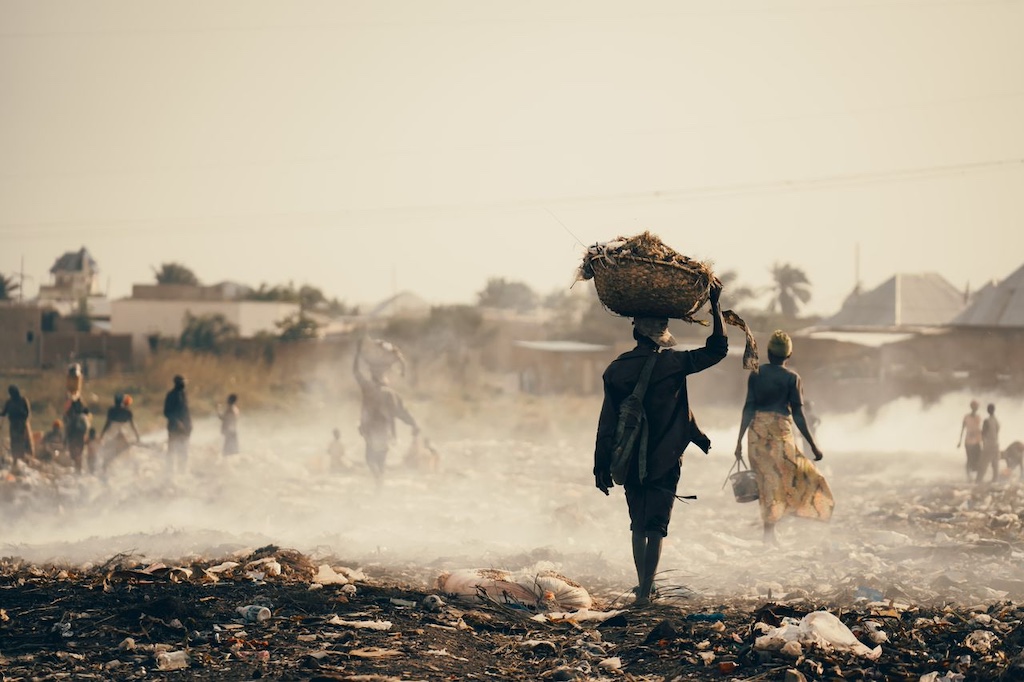
https://www.pexels.com/photo/environmental-impact-of-waste-in-burundi-38786319/
Waste Management as Part of Emissions Reduction Targets
If Indonesia aims to reduce greenhouse gas emissions consistently, the waste sector cannot be overlooked.
Waste-related emissions can be reduced through a combination of strategies, including reducing waste generation, sorting, recycling, organic waste treatment, improved landfill management, and increasing the efficiency of waste collection vehicles.
These approaches can also be combined with emissions reduction strategies in the industrial and transportation sectors.
For example, companies can reduce fuel consumption through fleet efficiency while ensuring that vehicle after-treatment systems operate properly. SCR and DEF technologies can form part of an emissions-control strategy for diesel vehicles that are specifically equipped with such systems.
In this way, emissions reduction can be addressed more comprehensively rather than focusing on a single source.
The Role of Industry in Reducing Its Environmental Footprint
Industry plays an important role in reducing environmental impacts because production and distribution activities require energy, fuel, materials, and logistics systems.
Improving energy efficiency can help reduce resource consumption while also lowering operating costs. Proper equipment maintenance can extend asset life and help maintain performance.
Companies can also begin incorporating environmental indicators into operational evaluations, including fuel consumption, emissions, waste volume, recycling rates, and energy efficiency.
This data can help companies identify which parts of their operations generate the greatest environmental impact and determine more targeted improvement measures.
A data-driven approach is becoming increasingly important because environmental management cannot rely solely on perception. Impacts need to be measured so that progress can be evaluated objectively.
Conclusion
Indonesia’s waste problem has evolved into a far more complex environmental challenge than simply keeping communities clean. With the country generating up to 51 million tons of waste annually, much of which is still not optimally managed, the risks to the environment and greenhouse gas emissions are becoming increasingly significant.
Poorly managed organic waste can generate methane, while waste collection and transportation also require energy and fuel. This demonstrates that the waste management system is directly connected to emissions reduction efforts.
Therefore, waste management needs to be positioned as part of a broader climate change mitigation strategy. Source-based sorting, waste reduction, recycling, organic waste treatment, improved landfill management, and more efficient waste transportation can form a series of interconnected solutions.
In the industrial and transportation sectors, these efforts can also be strengthened through diesel engine efficiency, preventive maintenance, and emissions-control technologies such as SCR and DEF for compatible vehicles and equipment.
Ultimately, climate justice is not only about achieving emissions reduction targets at the national or global level. It also begins with cleaner environments, more responsible waste management systems, and efforts to ensure that communities do not bear disproportionate environmental impacts caused by unsustainable systems.
Reducing waste means reducing environmental pressure. Managing emissions means protecting air quality and the climate. When both efforts are carried out together, waste management can become an important part of building a more efficient, resilient, and sustainable Indonesia.
Read other Articles: CO₂ Levels Reach Record High, WMO Warns of Climate Disaster